Materials & finishes
Stainless Steel vs Zinc-Plated Fasteners: How to Choose
Compare stainless steel and zinc-plated carbon steel fasteners by corrosion exposure, strength, assembly behaviour and purchasing requirements.
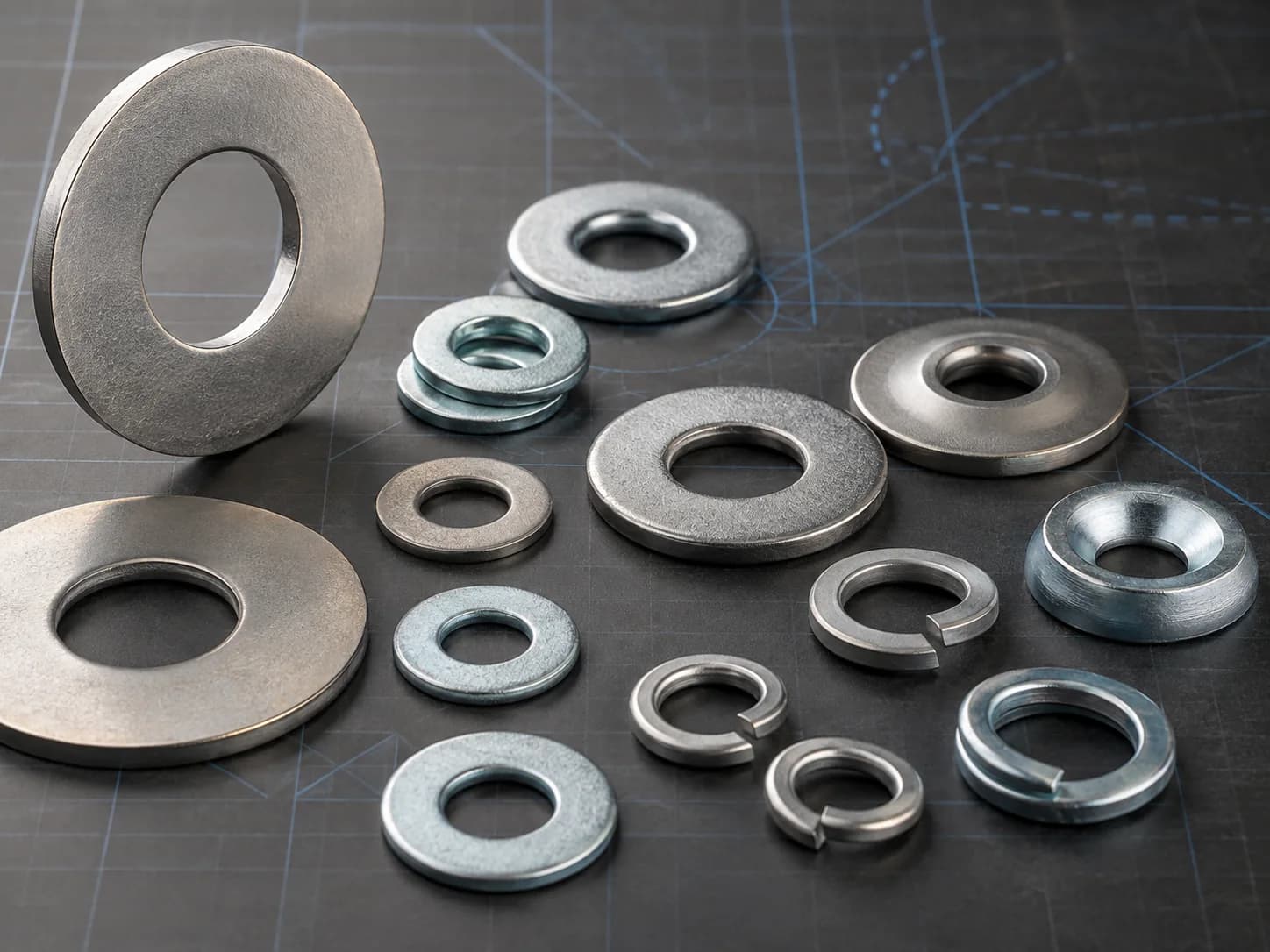
Stainless steel and zinc-plated carbon steel can look similar in a catalogue but solve different procurement problems. The correct choice depends on exposure, required strength, mating materials, installation method and expected service life.
A finish should never be selected from appearance alone. Describe the operating environment and let the specification define the required performance and verification.
The basic difference
Stainless steel obtains corrosion resistance from the alloy itself. Zinc-plated carbon steel relies on a protective surface layer over a steel core. Damage, coating thickness and local exposure therefore affect the two systems differently.
| Factor | Stainless steel | Zinc-plated carbon steel |
|---|---|---|
| Protection | Inherent alloy resistance | Sacrificial surface coating |
| Strength range | Depends on stainless class | Broad carbon/alloy steel classes |
| Surface damage | No separate zinc layer to remove | Can reduce local coating protection |
| RFQ wording | Grade and class | Steel class plus coating specification |
Match the environment first
Indoor dry service, outdoor weather, coastal chloride exposure and chemical processing are not interchangeable. State moisture, salt, temperature and contact chemicals where they are known. For critical service, the project engineer should define the material and coating system.
- Indoor or outdoor location
- Coastal or chloride exposure
- Chemical or wash-down contact
- Operating temperature
- Required design life and maintenance access
Consider the mating materials
Dissimilar metals can create galvanic corrosion when electrically connected in the presence of moisture. The fastener, joined parts, washers and coatings should be reviewed as one system rather than isolated components.
- Identify every metal in the joint
- Check whether moisture can bridge the materials
- Use approved isolation methods where required
- Avoid changing only one component without reviewing the assembly
Information to include in the quotation
For stainless fasteners, identify grade and property class rather than writing only “stainless.” For coated steel, name the base property class, coating process, thickness or performance requirement, colour if relevant and the inspection method.
- Product and dimensional standard
- Base material or grade
- Mechanical property class
- Coating designation and thickness
- Corrosion-test requirement if specified
Frequently asked questions
Is stainless steel always better outdoors?
Not automatically. Grade, chloride exposure, strength, mating materials and cost all matter. Use the project specification for safety-critical or aggressive environments.
Is zinc plating the same as hot-dip galvanizing?
No. They are different processes with different coating characteristics and dimensional implications. State the required process explicitly.
Specification note
This article is general procurement guidance. The current standard edition, approved drawing and project engineer’s requirements control the final product selection.